 Digital
 Ecommerce
 Marketing
 Search Engine
 Social Media
 Web
Web


 Hire
Hire


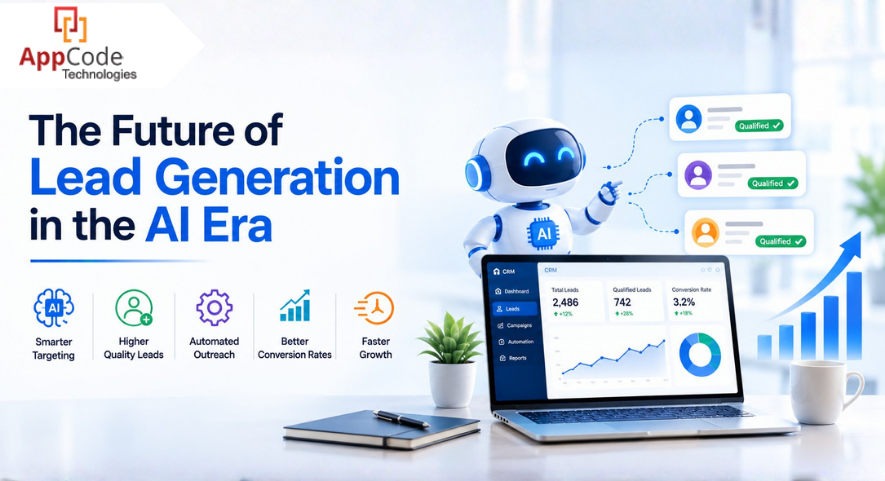
The Future of Lead Generation in the AI Era
 18 Sep 2026
 AppCode Technologies
Lead generation has always been an important part of business growth. Companies need a steady flow of inquiries, prospects, and potential customers to grow sales and revenue. But the way businesses generate leads is changing fast. Traditional methods like cold calling, random ads, manual follow-ups, and basic contact forms are no longer enough.
In the AI era, lead generation is becoming smarter, faster, and more data-driven. Businesses can now use artificial intelligence, automation, analytics, and digital marketing tools to identify the right audience, personalize communication, improve lead quality, and reduce wasted effort.
The future of lead generation is not only about getting more leads. It is about getting better leads, understanding customer behaviour, and building a system that converts inquiries into real business opportunities.
What Is Lead Generation in the AI Era?
Lead generation in the AI era means using modern technology, automation, and data intelligence to attract, capture, qualify, nurture, and convert potential customers. Instead of depending only on manual work, businesses can use AI-powered tools to improve every stage of the lead journey.
AI can help businesses understand which customers are more likely to convert, which campaigns are performing better, which messages are working, and which leads need immediate follow-up.
A modern lead generation system may include:
- AI-powered audience targeting
- Marketing automation
- Lead scoring
- Personalized email campaigns
- Chatbots and website assistants
- CRM and lead tracking
- Predictive analytics
- Performance dashboards
- SEO and content marketing
- Paid advertising optimization
This creates a more structured and scalable lead generation process.
Why Traditional Lead Generation Is Becoming Weak
Many businesses still follow old lead generation methods. They run ads without proper tracking, collect leads without qualification, call every inquiry with the same approach, and depend on manual follow-ups. This creates low conversion rates and wasted sales effort.
Traditional lead generation often creates these problems:
- Too many low-quality leads
- Slow response time
- Missed follow-ups
- Poor customer targeting
- High cost per lead
- Weak campaign tracking
- No lead nurturing system
- Sales team overload
- Low conversion rate
In a competitive market, these problems can reduce growth. Businesses need smarter systems to attract qualified leads and convert them efficiently.
1. AI Will Improve Lead Quality
One of the biggest changes in the future of lead generation is better lead quality. AI can analyze customer behaviour, campaign performance, website activity, search intent, and engagement patterns to identify which leads are more likely to convert.
Instead of sending every lead to the sales team equally, AI can help prioritize high-intent prospects. For example, a person who visits service pages multiple times, downloads a brochure, and submits a form may be more valuable than someone who only clicks an ad once.
Better lead quality helps businesses:
- Save sales team time
- Reduce irrelevant inquiries
- Improve conversion rates
- Lower customer acquisition cost
- Increase revenue opportunities
This makes AI useful not only for marketing teams but also for sales teams.
2. Personalization Will Become More Important
Generic communication is losing effectiveness. Customers expect relevant, timely, and useful communication. AI helps businesses personalize messages based on user behavior, interest, industry, location, and buying stage.
For example, a lead interested in ecommerce services should receive different content from a lead interested in SEO or website development. A first-time visitor needs educational content, while a high-intent lead may need a consultation offer or case study.
Personalized communication can improve:
- Email open rates
- Customer engagement
- Lead nurturing
- Trust building
- Conversion chances
In the AI era, businesses that use personalization properly will have an advantage over companies sending the same message to every prospect.
3. Automation Will Reduce Lead Leakage
Lead leakage happens when potential customers enter the system but are not handled properly. This may happen because of delayed response, missed calls, unassigned leads, poor follow-up, or scattered communication.
Marketing automation helps reduce this leakage. When a new lead comes from a website form, ad campaign, social media, WhatsApp, or email, automation can instantly assign it to the right team member, send confirmation, create follow-up reminders, and start nurturing workflows.
This ensures that leads are not lost due to manual mistakes.
Automation can support:
- Lead capture
- Lead assignment
- Follow-up reminders
- Email sequences
- WhatsApp updates
- Remarketing
- Lead nurturing
- Reporting
This is why automation will remain a major part of the future of lead generation.
4. Chatbots and AI Assistants Will Support Faster Response
Customers want quick answers. If a visitor comes to your website and does not find support, they may leave. AI chatbots and virtual assistants can help answer common questions, guide users, collect details, and qualify leads before the sales team connects.
A chatbot can ask questions such as:
- What service are you looking for?
- What is your business type?
- What is your budget range?
- When do you want to start?
- Would you like a callback?
This helps collect useful information and improves lead qualification. It also gives customers a faster experience.
5. Predictive Analytics Will Help Businesses Make Better Decisions
Predictive analytics uses past data and current behaviour to estimate future outcomes. In lead generation, it can help businesses understand which campaigns may perform better, which leads are likely to convert, and which customers may need follow-up soon.
This helps businesses move from guesswork to data-driven decisions.
Predictive analytics can help with:
- Campaign planning
- Lead scoring
- Customer segmentation
- Sales forecasting
- Budget allocation
- Conversion optimization
As competition increases, businesses that use data intelligently will make faster and better marketing decisions.
6. SEO and Content Will Become More Intent-Based
SEO will continue to play an important role in lead generation, but content quality and search intent will become more important. Businesses must create content that answers real customer questions, solves problems, and builds trust.
In the AI era, search engines and AI-powered platforms are becoming better at understanding user intent. This means keyword stuffing will not work. Businesses need useful content, strong service pages, FAQs, case studies, and industry insights.
Good content helps attract users who are already searching for solutions. It also supports long-term organic lead generation.
7. Sales and Marketing Alignment Will Be Essential
Lead generation is not only a marketing activity. Sales teams must also be part of the process. Marketing can generate leads, but sales feedback helps improve targeting, messaging, and campaign quality.
AI and automation tools can help both teams work together by showing lead sources, customer interactions, follow-up status, and conversion results.
When sales and marketing are aligned, businesses can improve:
- Lead quality
- Follow-up process
- Campaign messaging
- Conversion rate
- Customer experience
- Revenue growth
This alignment will become even more important in the AI era.
8. Real-Time Reporting Will Become a Business Need
Businesses cannot wait until the end of the month to know whether campaigns are working. Real-time reporting helps leadership track lead generation performance daily.
A real-time dashboard can show:
- Total leads generated
- Lead source performance
- Qualified leads
- Cost per lead
- Conversion rate
- Follow-up status
- Campaign ROI
- Sales pipeline movement
With real-time reporting, companies can quickly improve campaigns, reduce waste, and focus on what is working.
How Businesses Can Prepare for the Future of Lead Generation
Businesses do not need to adopt every AI tool immediately. They should start with a clear strategy.
First, identify all current lead sources. Second, improve website and landing pages. Third, set up proper lead tracking. Fourth, use marketing automation for follow-ups. Fifth, create useful SEO content. Sixth, use analytics to measure performance. Seventh, train sales and marketing teams to work together.
This step-by-step approach helps businesses build a strong lead generation system without confusion.
Conclusion
The future of lead generation in the AI era will be smarter, faster, and more focused on quality. Businesses will need more than basic ads and manual follow-ups. They will need AI-powered targeting, marketing automation, personalized communication, lead scoring, chatbots, predictive analytics, SEO, content marketing, and real-time reporting.
The main goal will not be only to generate more inquiries. The goal will be to attract qualified leads, manage them properly, nurture them consistently, and convert them into customers.
AppCode Technologies helps businesses build modern lead generation systems through digital marketing, SEO, website development, ecommerce solutions, marketing automation, business analytics, and performance tracking. With the right strategy and technology, companies can prepare for the AI era and build a stronger foundation for sustainable growth.
FAQs
1. What is the future of lead generation in the AI era?
The future of lead generation in the AI era is focused on better lead quality, automation, personalization, predictive analytics, faster response, and data-driven marketing decisions.
2. How can AI improve lead generation?
AI can improve lead generation by analyzing customer behavior, identifying high-intent prospects, improving targeting, personalizing communication, scoring leads, and predicting conversion chances.
3. Why is marketing automation important for lead generation?
Marketing automation helps capture leads, assign them quickly, send follow-up reminders, nurture prospects, and reduce missed opportunities. It improves speed and consistency in the lead process.
4. Will SEO still matter in AI-based lead generation?
Yes, SEO will remain important because customers still search for solutions online. However, content quality, search intent, helpful information, and strong website structure will become more important.
5. How can AppCode Technologies help with AI-era lead generation?
AppCode Technologies helps businesses with digital marketing, SEO, website development, marketing automation, lead generation strategy, analytics, and performance tracking to build better lead generation systems.
How Marketing Automation Can Increase Qualified Leads by 3X
What Is a Martech Stack and Why Every Growing Company Needs One

Sales Dashboard Every CEO Should Review Daily
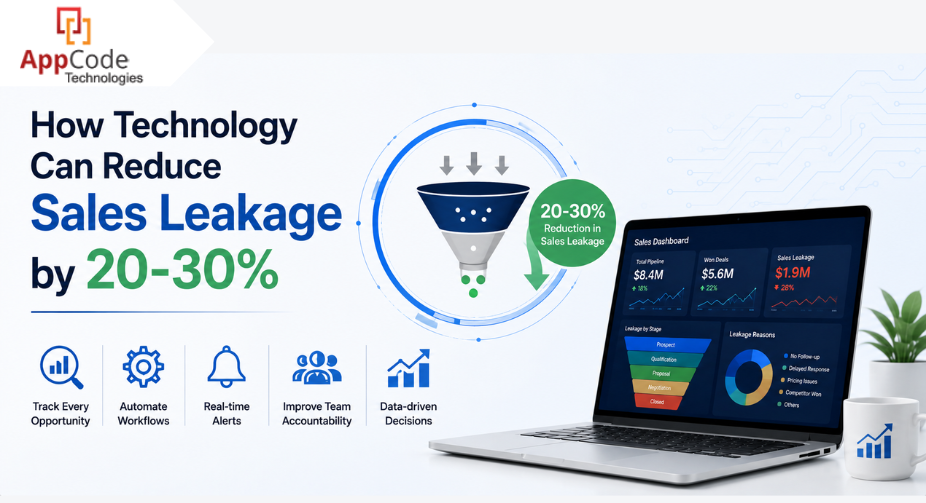
How Technology Can Reduce Sales Leakage by 20-30%
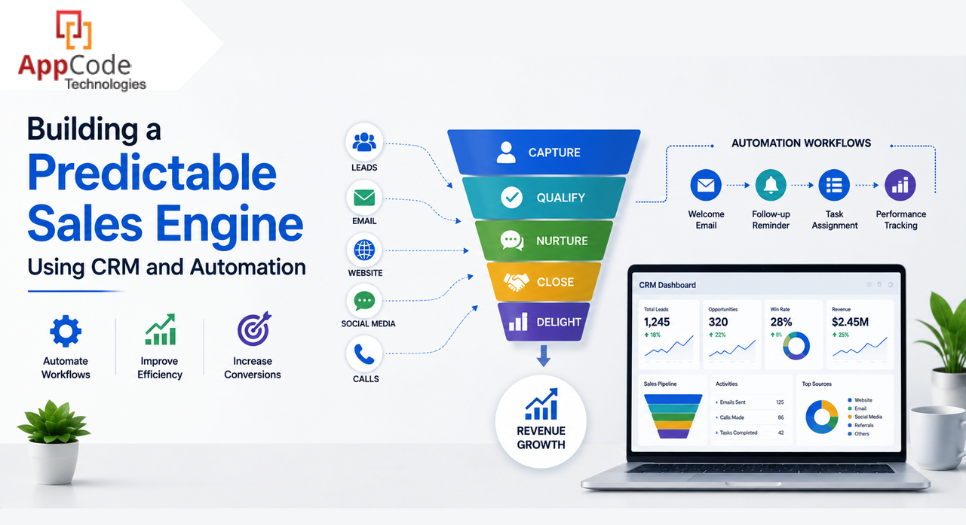
Building a Predictable Sales Engine Using CRM and Automation
How Marketing Automation Can Increase Qualified Leads by 3X
What Is a Martech Stack and Why Every Growing Company Needs One
Sales Dashboard Every CEO Should Review Daily
How Technology Can Reduce Sales Leakage by 20-30%
Building a Predictable Sales Engine Using CRM and Automation

Why Your Sales Team Is Working Hard But Revenue Isn't Growing
Top 10 Technology Investments Every Mid-Sized Company Should Make Before 2030
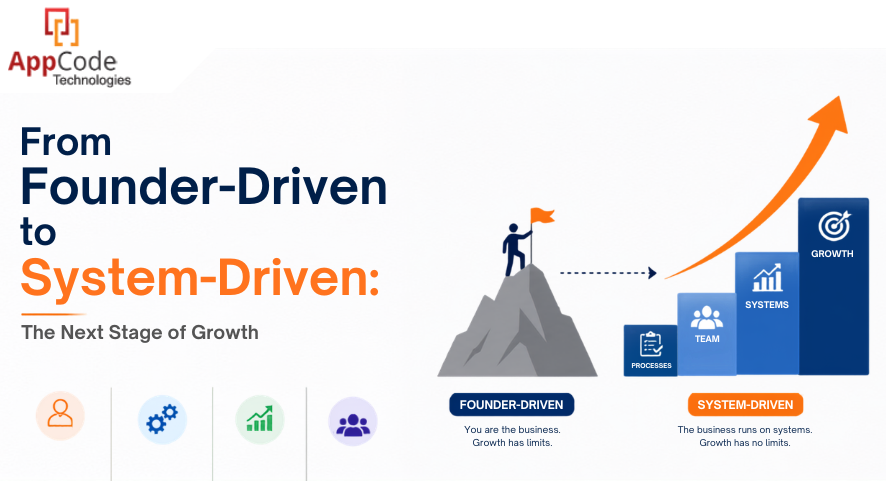
From Founder-Driven to System-Driven: The Next Stage of Growth

The Hidden Cost of Running a Business Without Real-Time Data