 Digital
 Ecommerce
 Marketing
 Search Engine
 Social Media
 Web


 Hire


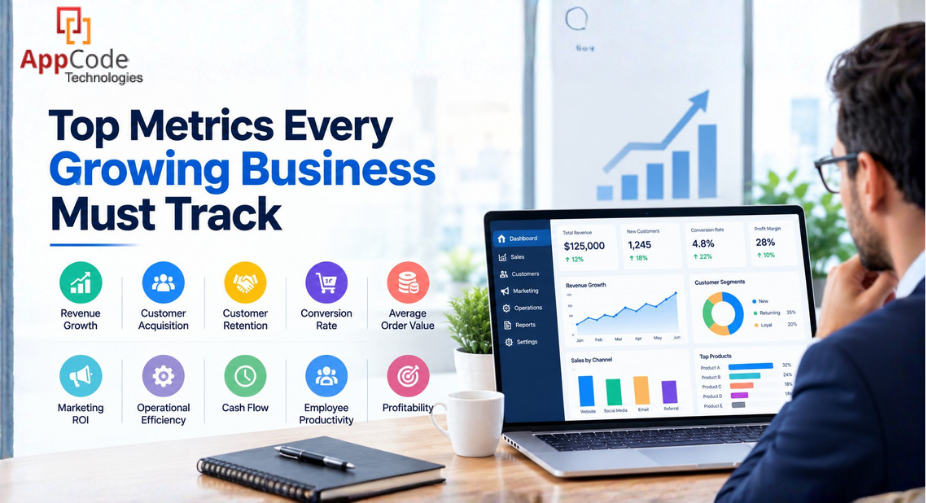
Top Metrics Every Growing Business Must Track
 22 Oct 2026
 AppCode Technologies
Every growing business wants higher revenue, better customer retention, stronger marketing performance, and sustainable expansion. However, growth becomes difficult when business owners depend only on assumptions or monthly reports. Without accurate data, companies may overlook operational problems, marketing inefficiencies, and financial risks.
Tracking the right business growth metrics helps companies understand performance, identify improvement opportunities, and make informed decisions. From sales and marketing to finance and customer satisfaction, every department contributes to business success.
For companies planning long-term expansion, understanding important business growth metrics is essential for improving profitability and building scalable operations.
Why Tracking Business Growth Metrics Is Important
Business growth is not measured only by increasing sales. A company may generate higher revenue but still experience declining profits, rising customer acquisition costs, or poor customer retention.
Tracking business growth metrics provides a complete picture of organizational performance. It helps CEOs and management teams understand which strategies are working and where improvements are required.
Key benefits include:
- Better financial planning
- Improved marketing performance
- Stronger sales visibility
- Reduced operational inefficiencies
- Higher customer satisfaction
- More accurate business forecasting
When leadership monitors performance consistently, decisions become more strategic and measurable.
1. Revenue Growth Rate
Revenue growth rate measures how quickly a company's sales revenue increases over a specific period.
It helps businesses understand whether their products, services, and sales strategies are generating sustainable growth.
Revenue Growth Rate = [(Current Revenue − Previous Revenue) ÷ Previous Revenue] × 100
For example, if monthly revenue increases from ?10 lakh to ?12 lakh, the revenue growth rate is 20%.
Tracking this metric helps businesses evaluate sales performance and identify changing market demand.
2. Customer Acquisition Cost (CAC)
Customer Acquisition Cost measures the average expense required to acquire a new customer.
It includes relevant marketing and sales expenses, such as advertising, campaign management, sales activities, and acquisition-related tools.
CAC = Total Customer Acquisition Expenses ÷ New Customers Acquired
A rising CAC may indicate poor targeting, ineffective campaigns, or declining conversion rates.
Businesses should monitor CAC alongside customer lifetime value to evaluate whether their acquisition strategy is financially sustainable.
3. Customer Lifetime Value (CLV)
Customer Lifetime Value estimates the total revenue or contribution a customer may generate throughout their relationship with a business.
Understanding CLV helps companies evaluate customer profitability and identify opportunities for repeat purchases.
Businesses can improve CLV through:
- Better customer service
- Personalized communication
- Loyalty programs
- Upselling and cross-selling
- Customer retention strategies
Comparing CLV with acquisition costs helps management make informed marketing investment decisions.
4. Lead Conversion Rate
Lead conversion rate measures the percentage of leads that become paying customers.
Lead Conversion Rate = (Converted Customers ÷ Total Leads) × 100
A business receiving 200 leads and converting 20 customers has a conversion rate of 10%.
A low conversion rate may indicate poor lead quality, delayed follow-ups, ineffective sales communication, or weak landing pages.
Marketing automation and lead management systems can help businesses track conversion performance and reduce missed opportunities.
5. Marketing Return on Investment
Marketing ROI measures the financial return generated from marketing investments.
Businesses should evaluate campaign profitability instead of focusing only on clicks, impressions, or lead volume.
Marketing ROI analysis helps identify:
- Profitable advertising campaigns
- Effective lead generation channels
- High-performing marketing strategies
- Unnecessary advertising expenses
Proper attribution and reporting enable companies to allocate marketing budgets more effectively.
6. Customer Retention Rate
Customer retention rate measures the percentage of existing customers who continue purchasing or using a company's services over time.
A strong retention rate often indicates customer satisfaction and consistent service quality.
Businesses can improve retention through regular communication, customer support, personalized offers, and reliable service delivery.
Retention is particularly important for subscription businesses, service providers, and companies dependent on repeat customers.
7. Profit Margin
Revenue alone does not determine business success. Profit margin shows how much income remains after accounting for relevant expenses.
Companies should monitor gross profit margin, operating profit margin, and net profit margin.
Declining margins may indicate rising costs, pricing problems, inefficient operations, or excessive marketing expenditure.
Tracking profitability alongside revenue helps companies avoid growth that creates financial pressure.
8. Sales Pipeline Performance
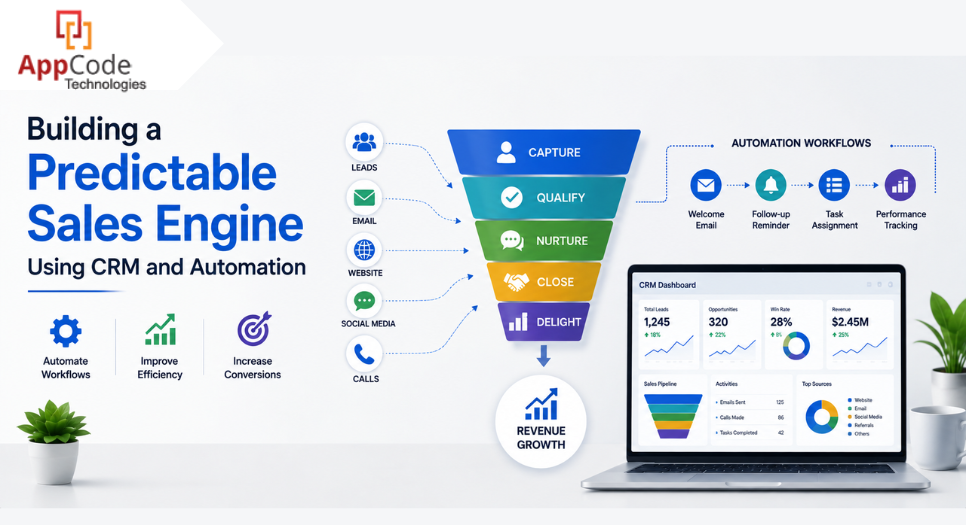
Sales pipeline performance helps businesses understand how leads move through different sales stages.
Important indicators include:
- Number of active opportunities
- Average deal value
- Sales cycle length
- Proposal conversion rate
- Pipeline value
- Deal win rate
A CRM dashboard provides visibility into these indicators and helps sales managers improve forecasting.
9. Website Conversion Rate
A website may attract thousands of visitors without generating meaningful inquiries.
Website conversion rate measures the percentage of visitors completing a desired action, such as submitting a form, requesting a consultation, or making a purchase.
Businesses can improve website conversions through faster loading speeds, clear calls-to-action, relevant content, mobile-friendly design, and better landing pages.
SEO and website analytics help identify traffic quality and conversion opportunities.
10. Operational Efficiency
Operational efficiency measures how effectively a company uses resources, employees, technology, and processes.
Important indicators include employee productivity, project completion time, order processing efficiency, and operational costs.
Business analytics tools and automation systems can help identify bottlenecks, reduce repetitive tasks, and improve productivity.
How Technology Helps Track Business Growth Metrics
Modern businesses can use business intelligence dashboards, CRM platforms, marketing automation, and analytics tools to monitor performance.
These systems connect information from sales, marketing, finance, and operations into centralized reports.
AppCode Technologies supports businesses through digital marketing, website development, SEO, marketing automation, and analytics solutions that improve performance visibility and decision-making.
Conclusion
Tracking the right business growth metrics helps companies understand their financial health, marketing performance, customer relationships, and operational efficiency.
Instead of depending on assumptions, growing businesses should use accurate reporting systems and performance dashboards to identify opportunities and address problems early.
With consistent tracking and data-driven planning, businesses can improve efficiency, manage costs, and build a stronger foundation for sustainable growth.
FAQs
1. What are the most important metrics for a growing business?
Important metrics include revenue growth rate, customer acquisition cost, customer lifetime value, conversion rate, marketing ROI, customer retention, profit margin, and operational efficiency.
2. Why should businesses track KPIs regularly?
Tracking KPIs helps businesses measure performance, identify problems, improve efficiency, and make better strategic decisions.
3. How do business growth metrics help CEOs?
Business growth metrics provide CEOs with insights into revenue, profitability, marketing effectiveness, sales performance, and organizational productivity.
4. Which tools help businesses track performance?
Businesses can use CRM software, Google Analytics, marketing automation platforms, business intelligence dashboards, and financial reporting tools.
5. How can AppCode Technologies help businesses improve performance tracking?
AppCode Technologies supports digital growth through website analytics, digital marketing, marketing automation, performance tracking, and reporting solutions.
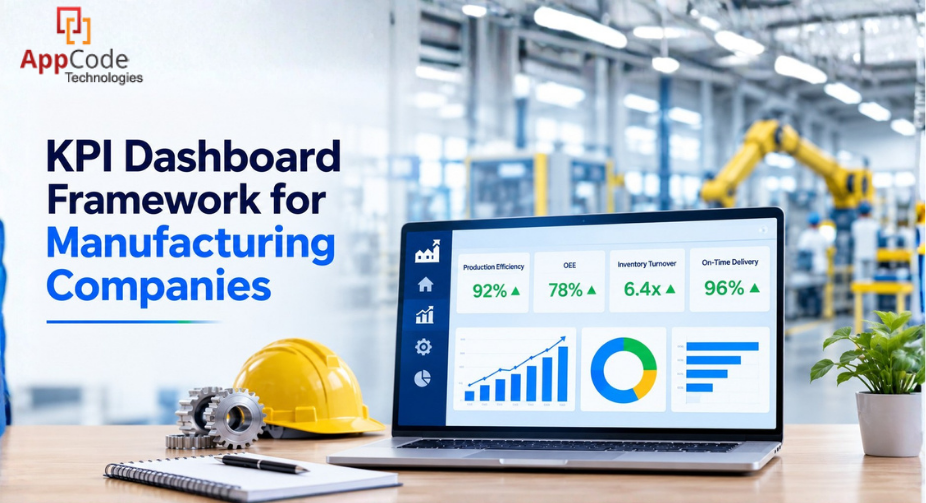
KPI Dashboard Framework for Manufacturing Companies

How Business Intelligence Helps CEOs Make Better Decisions
Why Most Companies Fail at Digital Marketing Despite Spending Lakhs

The Future of Lead Generation in the AI Era
How Marketing Automation Can Increase Qualified Leads by 3X
KPI Dashboard Framework for Manufacturing Companies
How Business Intelligence Helps CEOs Make Better Decisions
Why Most Companies Fail at Digital Marketing Despite Spending Lakhs
The Future of Lead Generation in the AI Era
How Marketing Automation Can Increase Qualified Leads by 3X
What Is a Martech Stack and Why Every Growing Company Needs One

Sales Dashboard Every CEO Should Review Daily
How Technology Can Reduce Sales Leakage by 20-30%
Building a Predictable Sales Engine Using CRM and Automation