 Digital
 Ecommerce
 Marketing
 Search Engine
 Social Media
 Web
Web


 Hire
Hire


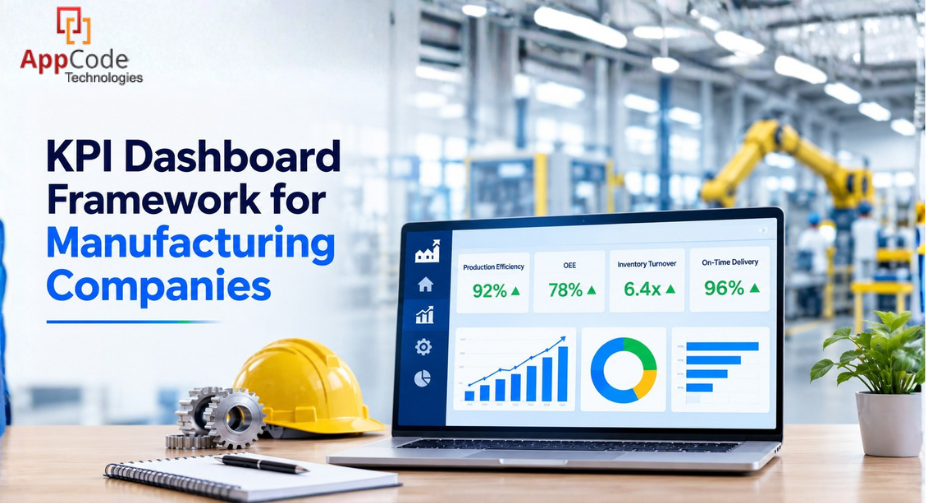
KPI Dashboard Framework for Manufacturing Companies
 15 Oct 2026
 AppCode Technologies
Manufacturing companies operate with multiple moving parts: production, inventory, quality, sales, procurement, machines, workforce, finance, and delivery timelines. If leadership does not have clear visibility into these areas, decision-making becomes slow and reactive. This is where a KPI dashboard framework for manufacturing companies becomes important.
A KPI dashboard helps manufacturers track key performance indicators in one place. Instead of depending only on manual reports, Excel sheets, or delayed updates, companies can monitor production performance, operational efficiency, sales trends, inventory movement, and financial health through a structured dashboard.
For growing manufacturing businesses, the right KPI dashboard framework for manufacturing companies can improve planning, reduce operational gaps, and support better business decisions.
What Is a KPI Dashboard for Manufacturing?
A KPI dashboard is a visual reporting system that displays important business metrics in a clear and easy-to-understand format. For manufacturing companies, it connects data from production, sales, inventory, finance, operations, and quality control.
A manufacturing KPI dashboard can show:
- Production output
- Machine utilization
- Inventory levels
- Order status
- Quality rejection rate
- Sales pipeline
- Delivery performance
- Cost of production
- Revenue trends
- Team productivity
This allows business owners, plant heads, operations managers, and CEOs to quickly understand performance and identify areas that need attention.
Why Manufacturing Companies Need KPI Dashboards
Manufacturing businesses often face challenges such as delayed production reports, stock mismatch, quality issues, machine downtime, missed delivery timelines, and poor visibility into cost and performance.
Without a KPI dashboard, these issues may only become visible after they affect revenue, customer satisfaction, or profitability.
A structured KPI dashboard helps manufacturing companies:
- Track real-time performance
- Improve production planning
- Reduce manual reporting
- Monitor operational efficiency
- Identify bottlenecks faster
- Improve quality control
- Support better financial decisions
- Align teams with business goals
For manufacturers aiming to scale, dashboard-driven decision-making is no longer optional.
1. Production Performance KPIs
Production is the core of any manufacturing company. A dashboard should clearly show how much production is planned, how much is completed, and where delays are happening.
Important production KPIs include:
- Planned production vs actual production
- Daily production output
- Production cycle time
- Machine utilization
- Downtime hours
- Work-in-progress status
- Production delay reasons
These KPIs help management understand whether the plant is running efficiently or whether production targets are being missed.
2. Inventory and Stock KPIs
Inventory plays a major role in manufacturing profitability. Too much stock blocks working capital, while too little stock can delay production and delivery.
A KPI dashboard should track:
- Raw material stock
- Finished goods inventory
- Slow-moving stock
- Stock-out alerts
- Inventory turnover
- Reorder levels
- Material consumption
With better inventory visibility, companies can reduce wastage, improve procurement planning, and avoid production interruptions.
3. Quality Control KPIs
Quality directly impacts customer satisfaction, brand reputation, and cost. Poor quality leads to rework, rejection, warranty claims, and delivery delays.
A manufacturing dashboard should include quality KPIs such as:
- Defect rate
- Rejection percentage
- Rework percentage
- Customer complaints
- Quality inspection status
- Batch-wise quality performance
- Supplier quality issues
Tracking quality KPIs helps companies detect problems early and maintain consistent product standards.
4. Sales and Order Management KPIs
Manufacturing is not only about production. Sales and order visibility are equally important. Leadership should know how many orders are active, which customers are pending, and how much revenue is expected.
Sales and order KPIs may include:
- New orders received
- Pending orders
- Order value
- Sales pipeline
- Customer-wise sales
- Repeat orders
- Order conversion rate
- Revenue forecast
When sales and production data are connected, companies can plan capacity, procurement, and delivery more effectively.
5. Delivery and Dispatch KPIs
Delayed delivery can damage customer relationships. A KPI dashboard helps track dispatch and delivery performance so teams can take action before delays become serious.
Important delivery KPIs include:
- On-time delivery rate
- Dispatch pending
- Delivery delay reasons
- Logistics performance
- Customer delivery status
- Order fulfillment time
These metrics help manufacturing companies improve customer satisfaction and operational planning.
6. Financial and Cost KPIs
Manufacturing companies must track cost carefully because small inefficiencies can reduce profit margins. A dashboard should give management visibility into production cost, revenue, expenses, and profitability.
Key financial KPIs include:
- Cost of production
- Revenue generated
- Gross margin
- Operating expenses
- Cost per unit
- Outstanding payments
- Cash flow
- Profitability by product or customer
These KPIs help leadership understand whether business growth is profitable or only revenue-driven.
7. Workforce and Productivity KPIs
People are an important part of manufacturing operations. Workforce productivity affects output, quality, and delivery timelines.
A dashboard can track:
- Worker productivity
- Attendance
- Overtime hours
- Shift-wise output
- Department-wise performance
- Training status
- Safety incidents
This helps companies improve workforce planning and team accountability.
How to Build a KPI Dashboard Framework
A strong KPI dashboard framework for manufacturing companies should not include too many unnecessary metrics. The dashboard should focus on the numbers that directly affect production, quality, sales, cost, and delivery.
The framework can be built in five steps:
- Define business goals
- Identify department-wise KPIs
- Connect data sources
- Create role-based dashboards
- Review and improve regularly
For example, a CEO dashboard may show revenue, production status, profitability, and delivery performance. A plant manager dashboard may focus on production output, downtime, quality, and workforce productivity. A sales dashboard may focus on orders, leads, customers, and revenue forecast.
Benefits of KPI Dashboards for Manufacturing Companies
A well-designed KPI dashboard helps manufacturing companies move from guesswork to data-driven decisions.
Key benefits include:
- Faster decision-making
- Better production control
- Reduced operational delays
- Improved quality management
- Stronger inventory planning
- Better sales and production alignment
- Improved profitability tracking
- Clear team accountability
- Real-time business visibility
When data is visible, teams can solve problems faster and leadership can plan growth with confidence.
Conclusion
A KPI dashboard framework for manufacturing companies helps businesses track performance across production, inventory, quality, sales, delivery, finance, and workforce management. It gives leadership a clear view of what is working, what is delayed, and where improvement is needed.
For manufacturing companies that want better control, stronger planning, and scalable growth, KPI dashboards are essential. They reduce manual reporting, improve accountability, and support smarter decisions.
AppCode Technologies helps businesses build digital growth systems through website development, SEO, digital marketing, marketing automation, real-time reporting, business analytics tools, and digital transformation services. With the right KPI dashboard framework, manufacturing companies can improve visibility, efficiency, and profitability.
FAQs
1. What is a KPI dashboard framework for manufacturing companies?
A KPI dashboard framework for manufacturing companies is a structured reporting system that tracks important metrics related to production, inventory, quality, sales, delivery, finance, and workforce performance.
2. Why do manufacturing companies need KPI dashboards?
Manufacturing companies need KPI dashboards to monitor real-time performance, identify bottlenecks, improve production planning, reduce delays, track quality, and make better business decisions.
3. What KPIs should a manufacturing dashboard include?
A manufacturing dashboard should include production output, machine utilization, inventory levels, defect rate, order status, on-time delivery, cost of production, revenue, and workforce productivity.
4. How does a KPI dashboard improve manufacturing efficiency?
A KPI dashboard improves efficiency by showing delays, quality issues, stock problems, downtime, and productivity gaps early so teams can take corrective action quickly.
5. How can AppCode Technologies help manufacturing companies?
AppCode Technologies helps manufacturing companies with real-time reporting systems, business analytics tools, digital transformation services, website development, SEO, digital marketing, and automation solutions.

How Business Intelligence Helps CEOs Make Better Decisions

Why Most Companies Fail at Digital Marketing Despite Spending Lakhs

The Future of Lead Generation in the AI Era

How Marketing Automation Can Increase Qualified Leads by 3X

What Is a Martech Stack and Why Every Growing Company Needs One
How Business Intelligence Helps CEOs Make Better Decisions
Why Most Companies Fail at Digital Marketing Despite Spending Lakhs
The Future of Lead Generation in the AI Era
How Marketing Automation Can Increase Qualified Leads by 3X
What Is a Martech Stack and Why Every Growing Company Needs One
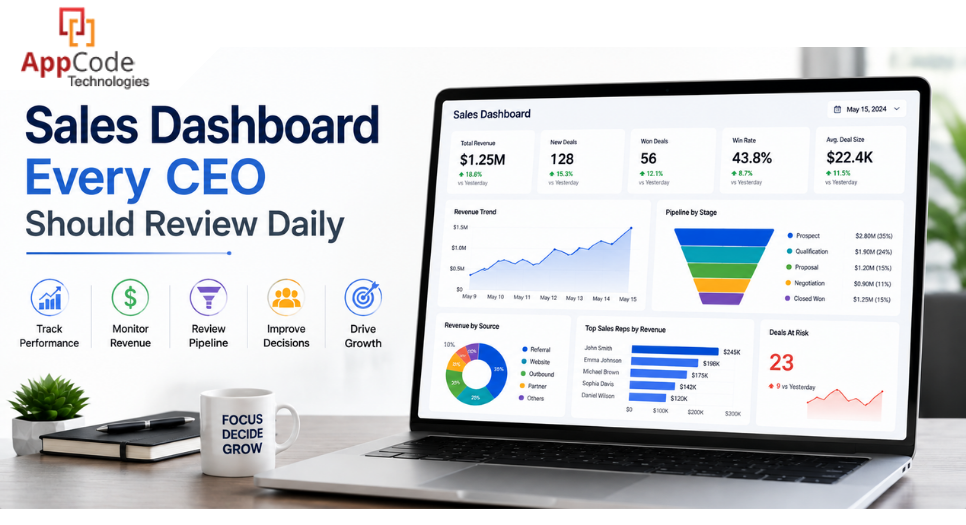
Sales Dashboard Every CEO Should Review Daily
How Technology Can Reduce Sales Leakage by 20-30%
Building a Predictable Sales Engine Using CRM and Automation
Why Your Sales Team Is Working Hard But Revenue Isn't Growing