 Digital
 Ecommerce
 Marketing
 Search Engine
 Social Media
 Web
Web


 Hire
Hire


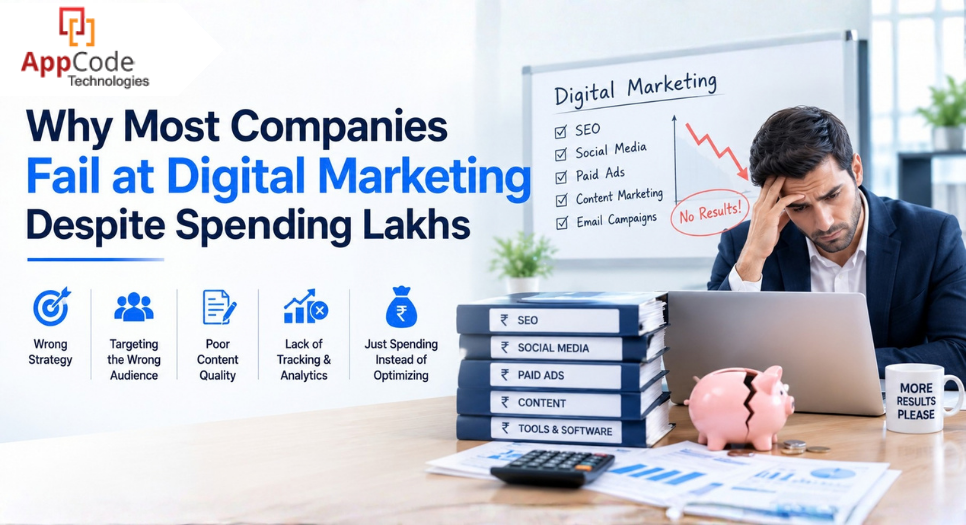
Why Most Companies Fail at Digital Marketing Despite Spending Lakhs
 24 Sep 2026
 AppCode Technologies
Many companies spend lakhs on digital marketing but still do not get the expected results. They run Google Ads, post regularly on social media, create website pages, hire agencies, and invest in SEO, but leads remain poor, conversions stay low, and revenue does not grow as planned. This creates frustration because the business is spending money, but the outcome does not justify the investment.
The reason most companies fail at digital marketing is not always lack of budget. In many cases, the problem is poor strategy, weak tracking, unclear audience targeting, low-quality content, bad landing pages, and no proper follow-up system. Digital marketing works only when every part of the system is connected: website, SEO, ads, content, automation, analytics, and sales process.
A company may spend heavily, but without a structured digital marketing strategy, the money can easily get wasted.
1. No Clear Digital Marketing Strategy
One of the biggest reasons companies fail at digital marketing is starting campaigns without a clear strategy. Many businesses begin with random posting, occasional ads, basic SEO, or trend-based content without understanding their audience, competition, goals, and customer journey.
A strong digital marketing strategy should answer:
- Who is the target audience?
- What problem does the customer have?
- Which platform is best for reaching them?
- What message should be communicated?
- What action should the customer take?
- How will results be measured?
Without these answers, digital marketing becomes guesswork. A business may get traffic and impressions, but not qualified leads.
2. Weak Website and Landing Pages
Many companies spend money on ads but send users to a weak website or poorly designed landing page. If the website is slow, confusing, outdated, or lacks clear calls-to-action, visitors will leave without converting.
A digital campaign can bring traffic, but the website must convert that traffic into inquiries. A strong website should have clear service pages, fast loading speed, mobile-friendly design, trust-building content, testimonials, case studies, and easy contact options.
If your website does not explain your value clearly, even the best digital marketing campaigns can fail.
3. Poor Audience Targeting
Digital marketing fails when the wrong audience sees the message. Many companies target broad audiences because they want more reach, but broad reach does not always mean better results.
For example, a B2B service company should not target everyone. It should target specific industries, decision-makers, business owners, managers, or people searching for a relevant solution.
Poor targeting increases ad spend and reduces lead quality. Proper audience targeting helps businesses reach people who are more likely to become customers.
4. Focus on Leads, Not Qualified Leads
Many businesses measure digital marketing success only by the number of leads generated. But not all leads are useful. Some leads are not serious, some do not have budget, and some are not the right fit.
Qualified leads are more important than total lead volume. A company needs leads that match the target customer profile, have genuine interest, and are more likely to convert.
This is why digital marketing should focus on lead quality, not just lead quantity. Better targeting, landing page optimization, lead scoring, and strong content can help improve lead quality.
5. No Tracking and Analytics
A major reason companies fail at digital marketing despite spending lakhs is lack of proper tracking. Many businesses do not know which campaign generated leads, which keyword converted, which page performed well, or which channel wasted budget.
Without tracking, businesses cannot improve. They continue spending money without knowing what is working.
Important tracking metrics include:
- Website traffic
- Lead source
- Cost per lead
- Conversion rate
- Campaign ROI
- Keyword performance
- Landing page performance
- Sales conversion ratio
Real-time reporting and business analytics tools help companies make better decisions and reduce wasted marketing spend.
6. Poor Content Quality
Content is one of the most important parts of digital marketing. But many companies publish generic content that does not answer customer questions or build trust.
Good content should educate, guide, and convince the audience. It should explain problems, provide solutions, show expertise, and support decision-making.
Content can include blogs, service pages, case studies, videos, social media posts, FAQs, and landing page copy. When content is weak, SEO performance drops, engagement remains low, and customers do not feel confident enough to contact the business.
7. Sales and Marketing Are Not Connected
Digital marketing does not end when a lead is generated. If the sales team does not follow up properly, the lead may be lost.
Many companies fail because marketing and sales work separately. Marketing generates inquiries, but sales does not update lead quality, objections, or conversion status. As a result, campaigns do not improve.
Sales and marketing must work together. Marketing should generate qualified leads, and sales should provide feedback to improve targeting, messaging, and follow-up strategy.
8. No Lead Nurturing System
Not every customer converts immediately. Some prospects need time, reminders, education, comparison, and trust-building before making a decision. If the business does not nurture leads, many opportunities are lost.
Marketing automation can help with email follow-ups, WhatsApp reminders, remarketing, customer segmentation, and lead nurturing workflows. This helps businesses stay connected with prospects and improve conversion chances.
A strong lead nurturing system ensures that potential customers do not forget your brand after the first interaction.
9. Expecting Quick Results Without Consistency
Digital marketing needs consistency. SEO takes time. Brand trust takes time. Content marketing takes time. Even paid ads need testing and optimization.
Many companies stop campaigns too early because they expect immediate results. Others keep changing strategy before collecting enough data. This prevents campaigns from maturing.
Successful digital marketing requires regular optimization, testing, reporting, and improvement.
How Companies Can Improve Digital Marketing Results
To get better results, companies should start with a proper audit of their website, campaigns, tracking, content, and sales process. They should define clear goals, identify the right audience, build strong landing pages, improve SEO, run targeted ads, create valuable content, and track every lead source.
A complete digital marketing system should include:
- Website optimization
- SEO strategy
- Paid ads strategy
- Content marketing
- Lead tracking
- Marketing automation
- Real-time reporting
- Sales follow-up process
When all these elements work together, digital marketing becomes more effective and measurable.
Conclusion
Most companies fail at digital marketing despite spending lakhs because they focus on activities instead of strategy. Running ads, posting content, or doing SEO is not enough if the website is weak, tracking is missing, audience targeting is poor, and sales follow-up is unstructured.
Digital marketing works best when it is planned, tracked, optimized, and connected with business goals. Companies need a complete system that includes strategy, website, SEO, ads, content, automation, analytics, and sales alignment.
AppCode Technologies helps businesses build result-focused digital marketing systems through website development, SEO, performance marketing, lead generation, marketing automation, ecommerce solutions, and real-time reporting. With the right strategy and execution, businesses can reduce wasted spend and turn digital marketing into a reliable growth engine.
FAQs
1. Why do companies fail at digital marketing despite spending lakhs?
Companies fail at digital marketing because they often lack strategy, proper tracking, audience targeting, quality content, strong landing pages, and a structured lead follow-up process.
2. How can businesses improve digital marketing results?
Businesses can improve results by creating a clear strategy, optimizing their website, targeting the right audience, tracking performance, improving content quality, and aligning sales with marketing.
3. Why is tracking important in digital marketing?
Tracking helps businesses understand which campaigns, keywords, platforms, and pages are generating leads and revenue. Without tracking, companies cannot optimize their marketing budget effectively.
4. What matters more: more leads or qualified leads?
Qualified leads matter more than total lead volume because they are more likely to convert into customers. Poor-quality leads waste sales time and increase marketing costs.
5. How does AppCode Technologies help with digital marketing?
AppCode Technologies helps businesses with digital marketing strategy, SEO, paid ads, website development, lead generation, marketing automation, ecommerce solutions, and real-time reporting.

The Future of Lead Generation in the AI Era

How Marketing Automation Can Increase Qualified Leads by 3X

What Is a Martech Stack and Why Every Growing Company Needs One

Sales Dashboard Every CEO Should Review Daily

How Technology Can Reduce Sales Leakage by 20-30%
The Future of Lead Generation in the AI Era
How Marketing Automation Can Increase Qualified Leads by 3X
What Is a Martech Stack and Why Every Growing Company Needs One
Sales Dashboard Every CEO Should Review Daily
How Technology Can Reduce Sales Leakage by 20-30%
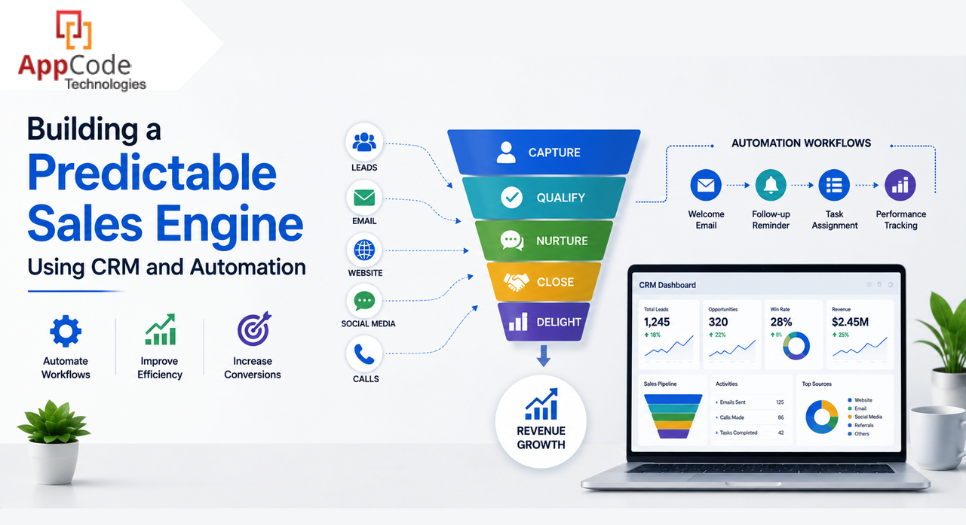
Building a Predictable Sales Engine Using CRM and Automation

Why Your Sales Team Is Working Hard But Revenue Isn't Growing

Top 10 Technology Investments Every Mid-Sized Company Should Make Before 2030
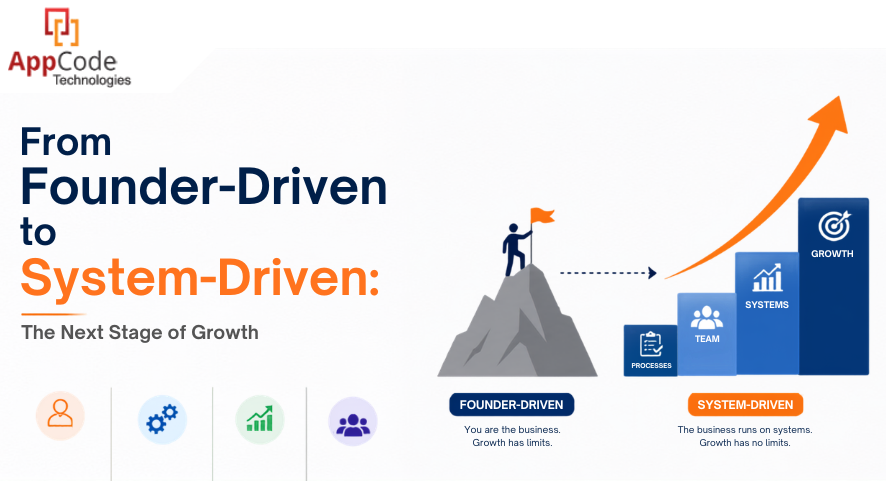
From Founder-Driven to System-Driven: The Next Stage of Growth