 Digital
 Ecommerce
 Marketing
 Search Engine
 Social Media
 Web
Web


 Hire
Hire


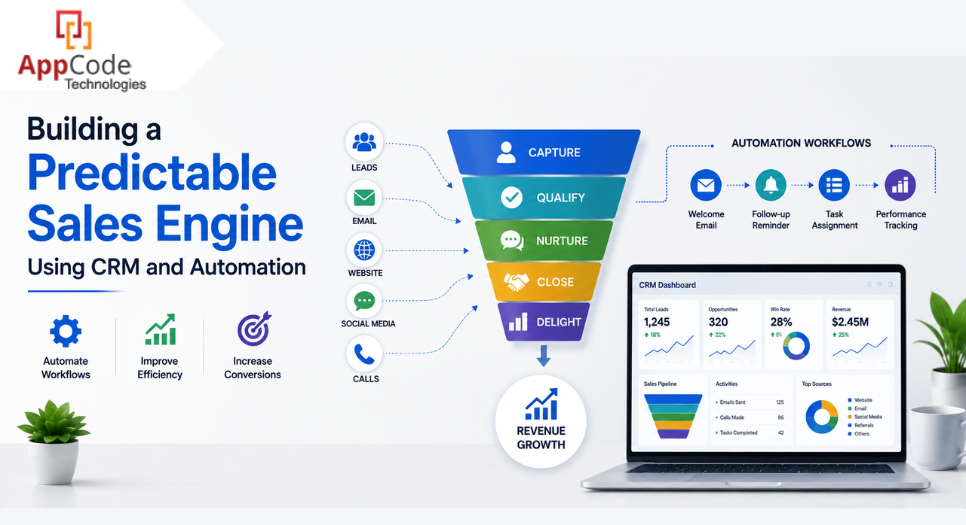
Building a Predictable Sales Engine Using CRM and Automation
 06 Aug 2026
 AppCode Technologies
For many growing businesses, sales depend too much on manual follow-ups, personal memory, scattered leads, and individual sales team effort. Some leads come from the website, some from ads, some from WhatsApp, some from calls, and some from referrals. But if there is no structured system to capture, track, nurture, and convert these leads, revenue becomes unpredictable.
This is where building a predictable sales engine using CRM and automation becomes important. A predictable sales engine helps businesses create a clear process for lead management, follow-ups, sales tracking, and customer communication. Instead of depending only on individual effort, the business starts working through systems.
CRM and automation help companies improve sales visibility, reduce missed opportunities, increase follow-up consistency, and make revenue growth more measurable. For businesses that want scalable growth, a strong sales engine is no longer optional.
What Is a Predictable Sales Engine?
A predictable sales engine is a structured sales system that helps a business generate, manage, nurture, and convert leads consistently. It gives the sales team a clear process and gives management visibility into the sales pipeline.
A predictable sales engine usually includes:
- Clear lead sources
- Lead capture system
- Lead qualification process
- Follow-up schedule
- Sales pipeline tracking
- Customer communication history
- Automated reminders
- Performance reports
- Conversion tracking
- Revenue forecasting
When these elements work together, sales become more organized and measurable. The business can understand where leads are coming from, which leads are serious, which deals are stuck, and which activities are producing revenue.
Why Manual Sales Processes Fail
Many businesses still manage sales through Excel sheets, phone calls, WhatsApp chats, emails, and manual notes. This may work when lead volume is low, but it becomes difficult as the business grows.
Manual sales processes create several problems:
- Leads get missed
- Follow-ups are delayed
- Sales data becomes scattered
- Team accountability becomes weak
- Managers do not get clear visibility
- Customer communication is inconsistent
- Revenue forecasting becomes difficult
When sales teams work manually, effort may be high, but output remains unpredictable. This is why CRM and automation are important for building a better sales system.
Role of CRM in Sales Growth
CRM stands for Customer Relationship Management. It helps businesses manage leads, customers, follow-ups, communication history, and sales pipeline in one place.
A CRM system allows the sales team to track every lead from the first inquiry to final conversion. It also helps management understand the current status of sales opportunities.
CRM helps businesses with:
- Lead capture
- Lead assignment
- Follow-up tracking
- Customer history
- Deal stage management
- Sales team performance
- Lead source analysis
- Revenue forecasting
With CRM, businesses no longer need to depend on scattered data. Every lead and customer interaction is stored in one system, making the sales process more transparent and organized.
How Automation Improves Sales Performance
Automation helps businesses reduce repetitive manual work. It ensures that important sales activities happen on time without depending only on memory or manual reminders.
Sales automation can support:
- Automatic lead assignment
- Follow-up reminders
- Email sequences
- WhatsApp notifications
- Lead nurturing workflows
- Proposal reminders
- Customer re-engagement
- Sales reports
- Task updates
For example, if a new lead comes from a website form, automation can assign it to the right sales executive instantly. If the lead is not contacted within a set time, the system can send a reminder. If the customer does not respond, an automated follow-up email can be sent.
This improves speed, consistency, and conversion chances.
Why CRM and Automation Work Better Together
CRM and automation become more powerful when used together. CRM stores and organizes customer data, while automation ensures that actions happen at the right time.
Together, they help businesses create a predictable sales engine.
For example:
- CRM captures the lead
- Automation assigns it to the sales team
- CRM tracks the lead stage
- Automation sends follow-up reminders
- CRM stores communication history
- Automation sends nurturing messages
- CRM reports sales performance
This reduces human error and improves sales discipline. The sales team gets better support, and management gets better control.
Better Lead Management
One of the biggest benefits of CRM and automation is better lead management. Many businesses lose leads because inquiries are not tracked properly. Some leads remain in email inboxes, some stay in WhatsApp chats, and some are never followed up.
A structured lead management system helps businesses capture all leads in one place. It also helps categorize leads based on interest, service requirement, budget, location, and readiness to buy.
Better lead management improves:
- Response time
- Lead quality tracking
- Follow-up consistency
- Sales team accountability
- Conversion rate
- Customer experience
When leads are managed properly, the sales team can focus on serious prospects instead of wasting time on scattered inquiries.
Improved Sales Pipeline Visibility
A sales pipeline shows where each lead stands in the buying journey. Without pipeline visibility, business owners may not know how many deals are active, which deals are likely to close, or where leads are getting stuck.
CRM gives a clear view of every pipeline stage, such as:
- New inquiry
- Contacted
- Requirement discussed
- Proposal sent
- Follow-up pending
- Negotiation
- Closed won
- Closed lost
This helps management forecast revenue and identify weak points in the sales process. If many leads are stuck after proposal sharing, the company can improve pricing, proposal format, or follow-up strategy.
Stronger Sales and Marketing Alignment
A predictable sales engine also connects marketing and sales. Marketing teams generate leads, but sales teams convert them. If both teams are not aligned, lead quality and revenue suffer.
CRM and automation help both teams understand:
- Which campaign generated the lead
- Which channel gives better inquiries
- Which keywords bring serious prospects
- Which landing page converts better
- Which lead source produces revenue
This improves decision-making and helps businesses spend marketing budgets more wisely.
Real-Time Reporting and Better Decisions
CRM and automation also provide better reporting. Instead of waiting for manual updates, leadership can see real-time sales performance.
Reports can show:
- Number of leads generated
- Lead source performance
- Follow-up status
- Sales executive performance
- Conversion rate
- Lost lead reasons
- Monthly revenue pipeline
- Campaign ROI
These insights help business owners make better decisions. They can identify what is working, what needs improvement, and where the team needs support.
Building a Predictable Sales Engine Step by Step
Businesses do not need to build everything at once. They can start with a simple process and improve it over time.
First, identify all lead sources such as website, ads, phone calls, WhatsApp, social media, and referrals. Second, connect these sources to a CRM or lead management system. Third, define sales pipeline stages clearly. Fourth, set follow-up rules and reminders. Fifth, automate repetitive communication. Sixth, track performance through dashboards. Finally, review reports regularly and improve the process.
This step-by-step approach helps businesses move from random sales activity to structured revenue growth.
Benefits of CRM and Automation for Business Growth
A strong CRM and automation setup can create long-term benefits for businesses.
Key benefits include:
- Faster lead response
- Better follow-up consistency
- Reduced lead leakage
- Improved sales team productivity
- Better customer communication
- Clear sales pipeline visibility
- Improved conversion rate
- Better revenue forecasting
- Stronger marketing performance
- Scalable sales growth
When sales processes become system-driven, businesses can grow with more confidence and less dependency on manual effort.
Conclusion
Building a predictable sales engine using CRM and automation is one of the most important steps for growing businesses. A company cannot depend only on manual follow-ups, scattered data, and individual sales effort if it wants consistent revenue growth.
CRM helps organize leads, customers, communication, and pipeline stages. Automation ensures that follow-ups, reminders, assignments, and nurturing happen on time. Together, they create a structured sales system that improves visibility, accountability, and conversions.
For businesses that want to improve sales performance, reduce missed opportunities, and scale revenue, CRM and automation can become a powerful foundation.
AppCode Technologies helps businesses build digital growth systems through website development, SEO, digital marketing, lead generation, marketing automation, CRM setup support, ecommerce solutions, and real-time reporting. With the right system in place, businesses can move from unpredictable sales activity to a more reliable and scalable revenue engine.
FAQs
1. What is a predictable sales engine?
A predictable sales engine is a structured system that helps businesses capture leads, manage follow-ups, track sales stages, measure performance, and improve revenue consistency through CRM, automation, and reporting.
2. How does CRM help in sales growth?
CRM helps businesses organize leads, customer details, communication history, follow-ups, and sales pipeline stages in one place. It improves visibility, accountability, and conversion tracking.
3. Why is automation important for sales teams?
Automation reduces manual work by handling lead assignment, reminders, follow-up messages, nurturing workflows, and reports. It helps sales teams respond faster and avoid missed opportunities.
4. Can CRM and automation improve lead conversion?
Yes, CRM and automation improve lead conversion by ensuring timely follow-ups, better lead tracking, personalized communication, and clear pipeline visibility.
5. How can AppCode Technologies help with CRM and automation?
AppCode Technologies helps businesses improve sales systems through marketing automation, CRM setup support, lead management, digital marketing, website development, and performance tracking.
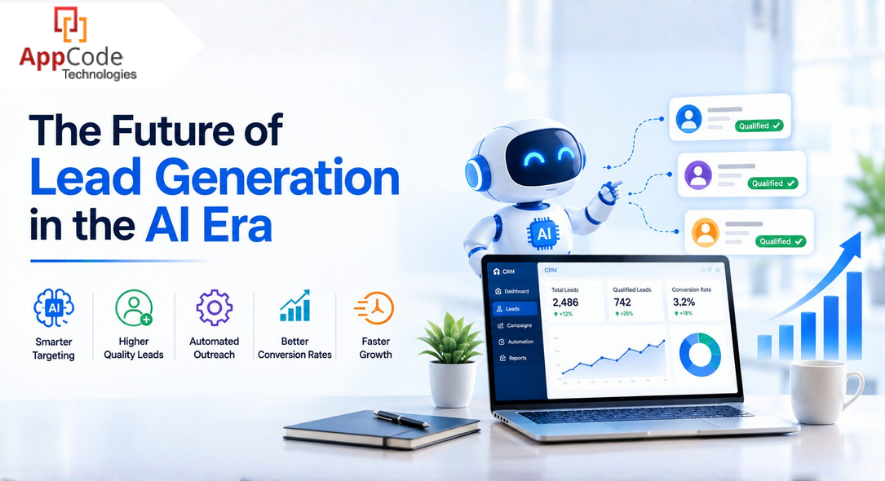
The Future of Lead Generation in the AI Era
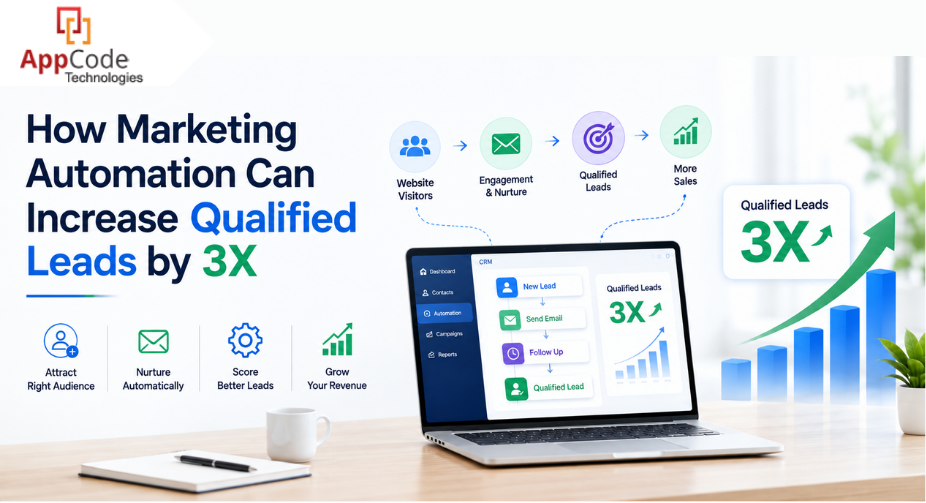
How Marketing Automation Can Increase Qualified Leads by 3X
What Is a Martech Stack and Why Every Growing Company Needs One

Sales Dashboard Every CEO Should Review Daily
How Technology Can Reduce Sales Leakage by 20-30%
The Future of Lead Generation in the AI Era
How Marketing Automation Can Increase Qualified Leads by 3X
What Is a Martech Stack and Why Every Growing Company Needs One
Sales Dashboard Every CEO Should Review Daily
How Technology Can Reduce Sales Leakage by 20-30%
Why Your Sales Team Is Working Hard But Revenue Isn't Growing
Top 10 Technology Investments Every Mid-Sized Company Should Make Before 2030
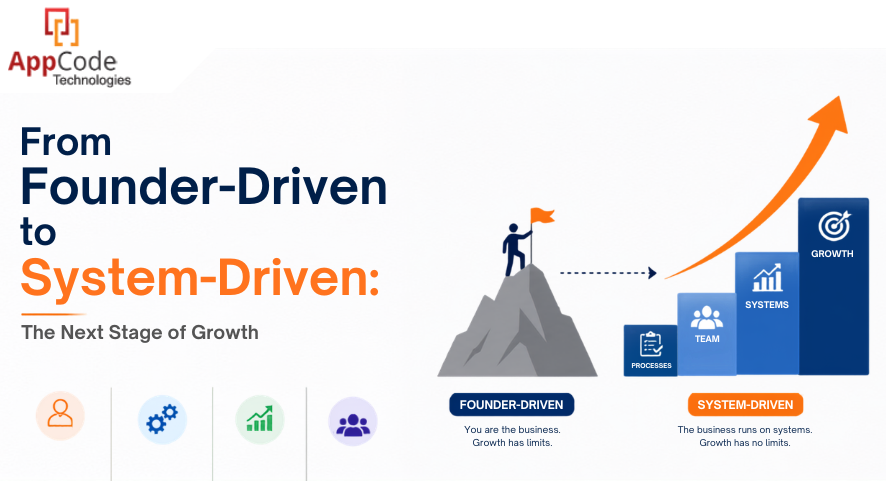
From Founder-Driven to System-Driven: The Next Stage of Growth

The Hidden Cost of Running a Business Without Real-Time Data