 Digital
 Ecommerce
 Marketing
 Search Engine
 Social Media
 Web


 Hire


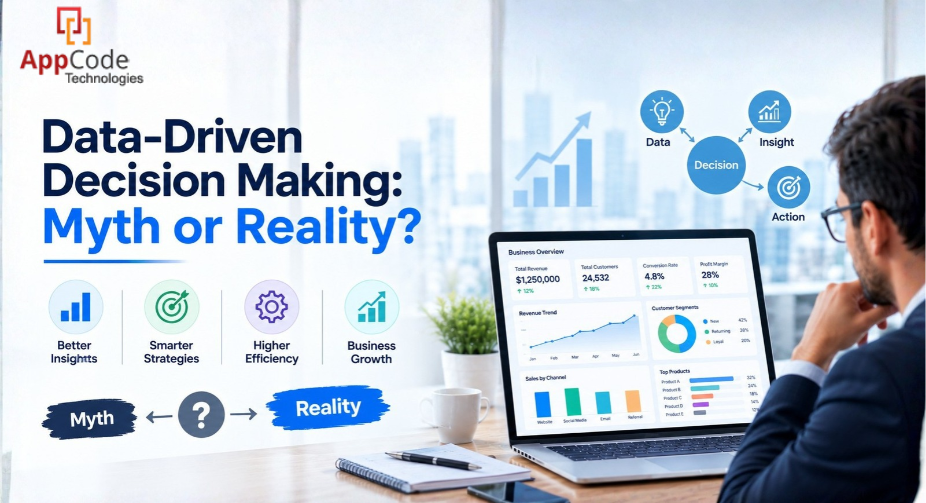
Data-Driven Decision Making: Myth or Reality?
 28 Oct 2026
 AppCode Technologies
In today's competitive business environment, companies generate large amounts of data through sales, marketing, customer interactions, websites, and daily operations. However, collecting information is not the same as using it effectively. Many business leaders still depend on experience, assumptions, and traditional reporting when making important decisions.
This raises an important question: Is data-driven decision making a practical business strategy or simply another corporate buzzword?
The reality is that data can significantly improve business decisions when companies use accurate information, relevant metrics, and proper analytics systems. However, data alone cannot guarantee success. Businesses must combine insights with experience, industry knowledge, and strategic thinking.
What Is Data-Driven Decision Making?
Data-driven decision making is the process of using reliable information, business analytics, and performance indicators to guide organizational decisions.
Instead of relying entirely on assumptions, companies examine measurable evidence before choosing a strategy.
For example, businesses can analyze:
- Sales performance and revenue trends
- Customer acquisition costs
- Marketing campaign results
- Website traffic and conversions
- Customer satisfaction levels
- Operational expenses
- Employee productivity
These insights help management understand performance and identify opportunities for improvement.
Why Businesses Are Moving Towards Data-Driven Strategies
Traditional business decisions often depend on personal experience and delayed departmental reports.
While experience remains valuable, it cannot always reveal changing customer behavior, operational inefficiencies, or marketing performance problems.
Modern businesses require faster access to accurate information.
A structured data-driven decision making approach helps companies monitor operations, evaluate results, and respond to changing market conditions.
It also creates greater transparency across departments, allowing leadership teams to work with consistent information.
1. Better Visibility Into Business Performance
One major advantage of business analytics is improved performance visibility.
Without centralized reporting, CEOs may receive different figures from sales, marketing, finance, and operations.
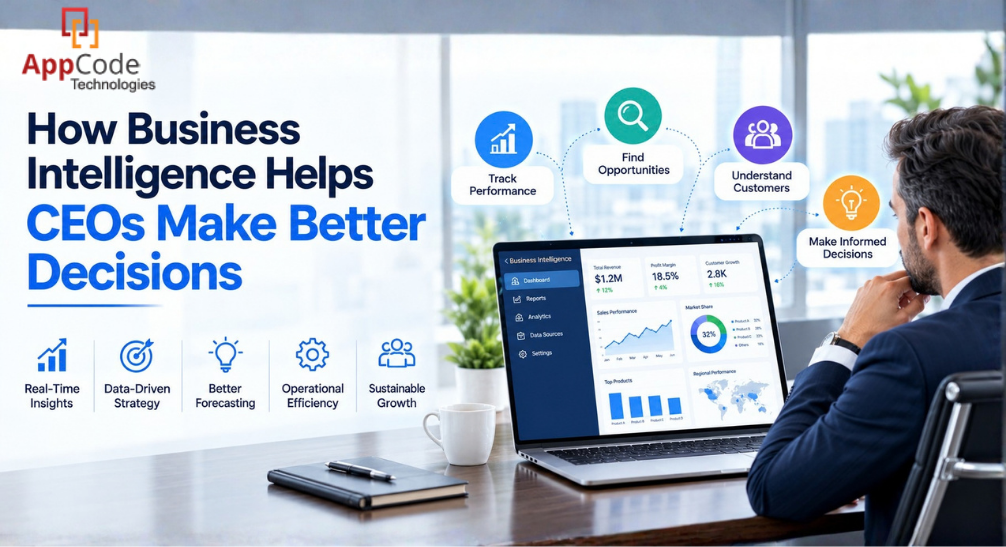
Business intelligence dashboards bring important metrics together, helping leadership understand overall organizational performance.
For example, a CEO dashboard may display monthly revenue, sales pipeline value, marketing ROI, operating expenses, and customer acquisition costs.
This centralized visibility makes it easier to identify performance gaps and prioritize improvements.
2. Smarter Marketing Investment Decisions
Many companies invest heavily in digital marketing without understanding which channels generate profitable customers.
Campaign impressions, website visits, and social media engagement may appear impressive, but they do not always translate into revenue.
Data-driven decision making helps businesses evaluate actual marketing outcomes.
Important indicators include:
- Cost per lead
- Customer acquisition cost
- Lead conversion rate
- Campaign-generated revenue
- Marketing return on investment
By monitoring these metrics, companies can reduce ineffective spending and allocate budgets toward better-performing campaigns.
3. Improved Sales Forecasting
Sales forecasting becomes difficult when businesses depend only on previous revenue figures or individual sales team estimates.
CRM platforms and analytics dashboards provide visibility into active opportunities, deal values, conversion rates, and sales pipeline movement.
This information helps management estimate potential revenue and identify opportunities requiring attention.
Although forecasting cannot eliminate uncertainty, reliable sales data can improve planning and resource allocation.
4. Faster Identification of Business Problems
Delayed reporting often means problems remain unnoticed until they affect profitability.
For example, a sudden decline in website conversions, increased customer complaints, or rising production costs may indicate operational issues.
Real-time reporting systems help businesses detect such changes earlier.
Management can investigate the causes, compare historical performance, and take corrective action before problems become more serious.
5. Better Customer Understanding
Understanding customer needs is essential for sustainable growth.
Business analytics tools help companies identify purchasing patterns, customer preferences, repeat purchase behavior, and engagement trends.
These insights support improved service delivery, personalized marketing, and customer retention strategies.
For example, an ecommerce business can examine abandoned carts, product demand, and repeat purchase frequency to improve its customer experience.
Is Data-Driven Decision Making Always Reliable?
Despite its advantages, data-driven decision making is not automatically successful.
Poor-quality data, inaccurate tracking, incomplete reports, and misleading metrics can create incorrect conclusions.
Businesses may also focus excessively on dashboards while ignoring customer feedback, market changes, and employee experience.
Common challenges include:
- Inconsistent data collection
- Disconnected business systems
- Poor reporting accuracy
- Lack of analytical expertise
- Misinterpretation of business metrics
- Excessive dependence on automation
Therefore, effective decisions require both reliable data and human judgment.
How Technology Makes Data-Driven Decisions Practical
Modern technology makes business analytics more accessible to growing companies.
CRM systems, marketing automation platforms, website analytics, and business intelligence dashboards can connect information from multiple departments.
These tools help businesses automate reporting, monitor performance, and reduce repetitive manual work.
However, organizations should select technology according to their business requirements rather than adopting unnecessary software.
A simple dashboard with relevant KPIs is often more useful than a complicated system containing hundreds of unrelated metrics.
How AppCode Technologies Supports Data-Driven Growth
AppCode Technologies helps businesses strengthen their digital operations through website development, SEO, digital marketing, marketing automation, and performance analytics.
By improving tracking, campaign measurement, lead management, and reporting processes, businesses can develop clearer visibility into their marketing and sales performance.
A connected digital ecosystem supports informed planning and more consistent performance evaluation.
Conclusion
So, is data-driven decision making a myth or reality?
It is a practical business approach when organizations use accurate information, meaningful KPIs, suitable technology, and experienced leadership.
Data cannot replace strategic thinking, but it can make decisions more informed, measurable, and transparent.
For growing companies, adopting data-driven decision making creates opportunities to improve marketing efficiency, strengthen sales planning, understand customers, and support sustainable business growth.
FAQs
1. What is data-driven decision making?
Data-driven decision making involves using business information, analytics, and key performance indicators to guide strategic and operational decisions.
2. Why is data-driven decision making important for businesses?
It helps businesses understand performance, identify problems, optimize spending, improve forecasting, and make more informed decisions.
3. Can data-driven decision making replace human judgment?
No. Data provides valuable insights, but effective decisions also require experience, market understanding, and strategic judgment.
4. Which tools support data-driven decision making?
Common tools include CRM platforms, Google Analytics, business intelligence dashboards, marketing automation software, and financial reporting systems.
5. How can small and growing companies adopt data-driven strategies?
Companies can start by defining important KPIs, improving data collection, implementing basic reporting dashboards, and reviewing performance regularly.
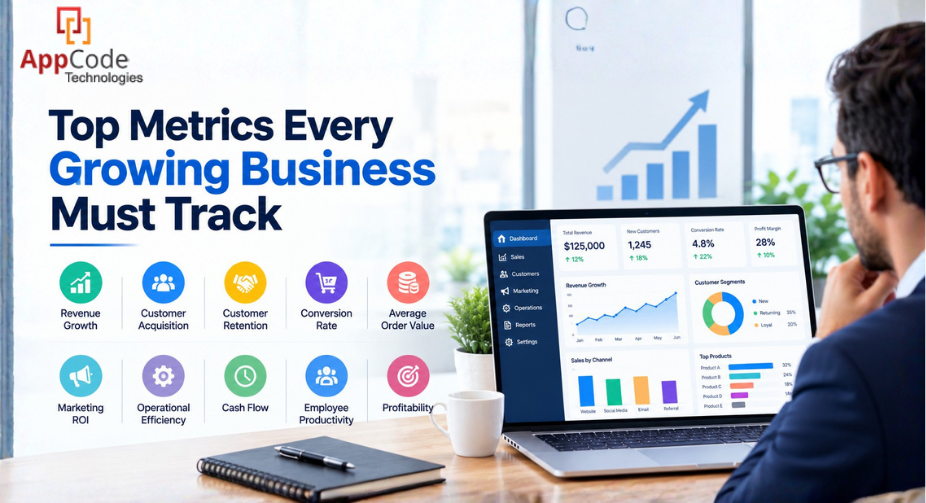
Top Metrics Every Growing Business Must Track
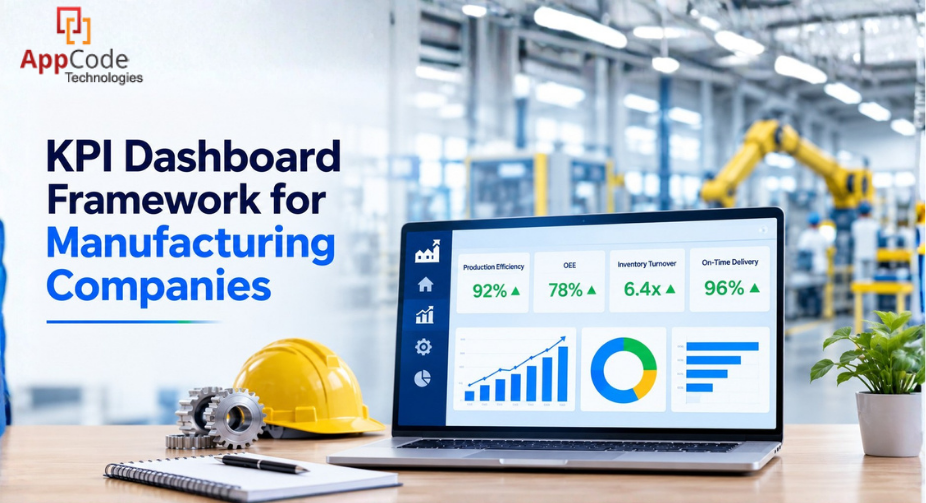
KPI Dashboard Framework for Manufacturing Companies
How Business Intelligence Helps CEOs Make Better Decisions

Why Most Companies Fail at Digital Marketing Despite Spending Lakhs
The Future of Lead Generation in the AI Era
Top Metrics Every Growing Business Must Track
KPI Dashboard Framework for Manufacturing Companies
How Business Intelligence Helps CEOs Make Better Decisions
Why Most Companies Fail at Digital Marketing Despite Spending Lakhs
The Future of Lead Generation in the AI Era
How Marketing Automation Can Increase Qualified Leads by 3X
What Is a Martech Stack and Why Every Growing Company Needs One
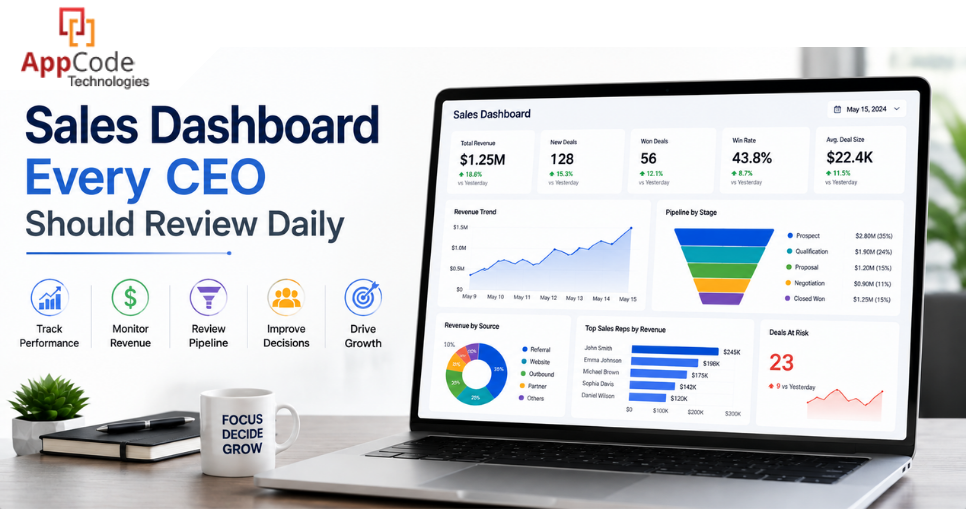
Sales Dashboard Every CEO Should Review Daily
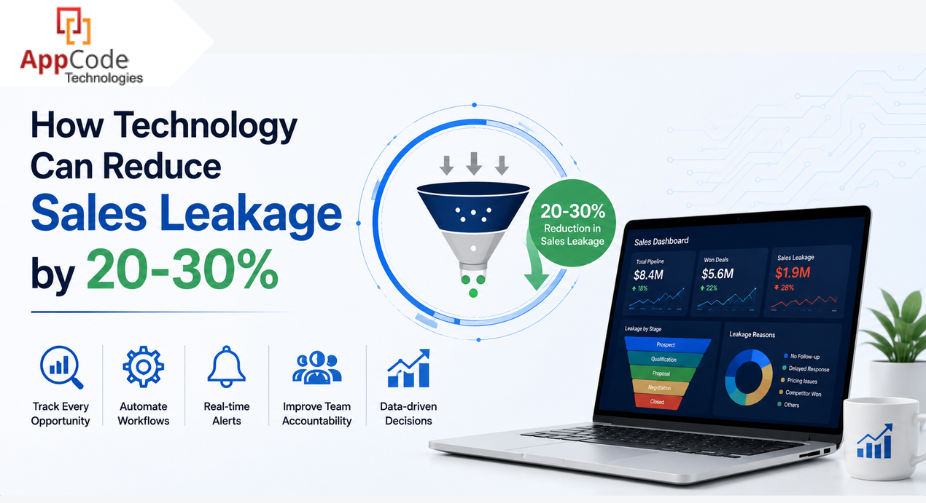
How Technology Can Reduce Sales Leakage by 20-30%