 Digital
 Ecommerce
 Marketing
 Search Engine
 Social Media
 Web


 Hire


Digital Transformation Roadmap for Manufacturing Companies
 05 Nov 2026
 AppCode Technologies
Manufacturing companies face increasing pressure to improve productivity, reduce operational costs, maintain product quality, and deliver orders on time. However, many businesses still depend on manual reporting, disconnected systems, and traditional production management methods.
A structured digital transformation for manufacturing companies strategy helps overcome these challenges by connecting technology, data, automation, and business processes.
Digital transformation is not simply about purchasing advanced machinery or installing new software. It involves improving how departments communicate, monitor performance, manage resources, and make decisions.
For growing manufacturers, a clear digital transformation roadmap provides a practical foundation for improving efficiency and achieving sustainable growth.
What Is Digital Transformation in Manufacturing?
Digital transformation in manufacturing means integrating digital technologies into production, inventory management, quality control, supply chain operations, sales, and business reporting.
The objective is to create connected operations where information moves efficiently between departments.
Modern manufacturing businesses can use:
- Enterprise Resource Planning (ERP) systems
- Manufacturing Execution Systems (MES)
- Industrial Internet of Things (IIoT)
- Business intelligence dashboards
- Inventory management software
- CRM and sales automation
- Predictive maintenance tools
- Cloud-based reporting systems
These technologies help organizations reduce manual work and improve operational visibility.
Why Manufacturing Companies Need Digital Transformation
Traditional manufacturing operations often struggle with delayed reports, production downtime, inventory mismatches, inconsistent quality, and poor coordination between departments.
Without connected systems, management may not receive accurate information when decisions are required.
Implementing digital transformation for manufacturing companies helps businesses identify inefficiencies, improve planning, and build more responsive operations.
It also enables manufacturers to make decisions based on measurable performance rather than assumptions.
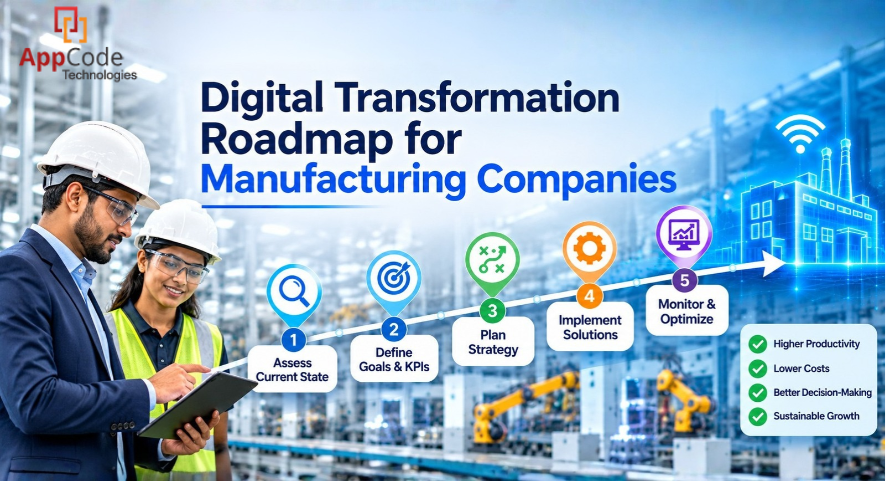
Step 1: Assess Current Manufacturing Operations
Every digital transformation roadmap should begin with an operational assessment.
Manufacturers must understand which processes are inefficient, which systems are disconnected, and where manual activities create delays.
Important areas to evaluate include:
- Production planning
- Machine utilization
- Inventory management
- Quality inspection
- Procurement processes
- Order management
- Financial reporting
This assessment helps businesses identify priorities before investing in technology.
Step 2: Define Clear Business Objectives
Digital transformation should support measurable business goals.
A manufacturer may want to reduce downtime, improve delivery performance, lower production costs, or increase inventory accuracy.
Businesses should establish key performance indicators such as production efficiency, defect rate, order fulfillment time, operational cost, and equipment availability.
Clear objectives help management evaluate whether technology investments are producing meaningful improvements.
Step 3: Digitize Production and Inventory Management
Production and inventory are critical areas for manufacturing efficiency.
Manual spreadsheets and disconnected reporting systems can create errors, delays, and inaccurate stock information.
ERP and inventory management systems help manufacturers track raw materials, production schedules, finished goods, and procurement requirements.
Connected production information also improves coordination between purchasing, manufacturing, and dispatch departments.
This creates better visibility into material availability and order fulfillment.
Step 4: Introduce Automation and Smart Manufacturing
Automation helps reduce repetitive manual activities and improve operational consistency.
Manufacturing companies can introduce digital workflows for production scheduling, quality reporting, maintenance reminders, and approval processes.
Advanced technologies such as IoT sensors can monitor machine conditions, operating temperatures, and equipment performance.
The long-term objective of digital transformation for manufacturing companies is to create smarter operations where technology supports employees and improves decision-making.
Step 5: Build Real-Time Business Intelligence Dashboards
Manufacturing leaders need accurate visibility into daily operations.
Business intelligence dashboards help connect information from production, inventory, sales, finance, and quality control.
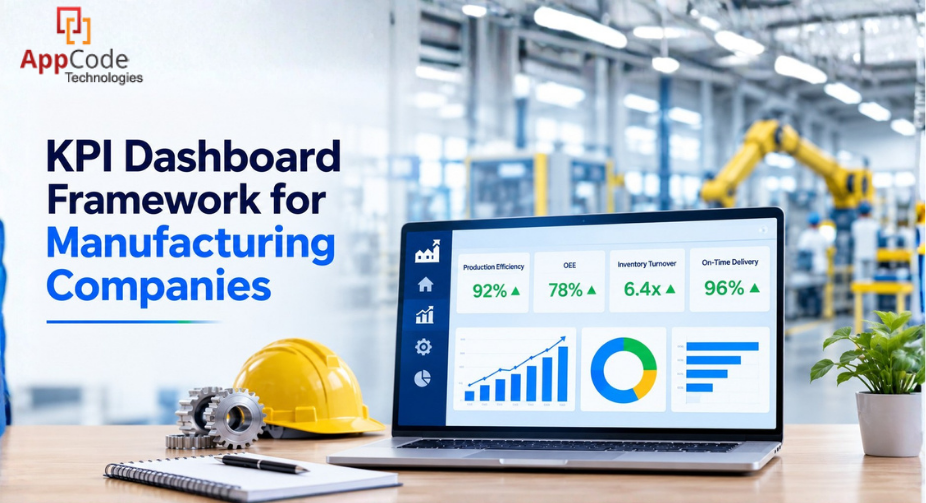
A manufacturing dashboard may display:
- Daily production output
- Machine downtime
- Inventory availability
- Quality rejection percentage
- Pending customer orders
- Production costs
- Revenue performance
Centralized reporting enables management to identify bottlenecks and respond more effectively.
Step 6: Connect Sales, Marketing, and Manufacturing Operations
Digital transformation should extend beyond the factory floor.
Manufacturing companies also need effective systems for managing inquiries, customer relationships, distributor communication, and order tracking.
CRM platforms and marketing automation tools can improve lead management, follow-up consistency, and sales pipeline visibility.
Connecting sales information with production planning helps manufacturers better understand customer demand and delivery commitments.
Step 7: Strengthen Cybersecurity and Employee Training
Connected manufacturing systems introduce new security and operational responsibilities.
Companies should establish access controls, secure data backups, cybersecurity policies, and reliable system integration practices.
Employee training is equally important.
Production teams, managers, and administrative employees need practical guidance to use new technologies effectively.
Successful adoption depends on both reliable technology and workforce readiness.
Step 8: Measure Results and Improve Continuously
Digital transformation is an ongoing improvement process.
Manufacturers should regularly compare performance against defined KPIs and review operational improvements.
Important measurements include:
- Production efficiency
- Inventory accuracy
- Equipment downtime
- Delivery performance
- Cost reduction
- Employee productivity
A phased digital transformation for manufacturing companies approach allows businesses to test solutions, evaluate results, and expand successful initiatives.
How AppCode Technologies Supports Manufacturing Businesses
supports digital business growth through website development, SEO, digital marketing, marketing automation, and performance analytics.
These solutions can help manufacturing companies strengthen their online presence, manage customer inquiries, improve lead tracking, and gain better visibility into commercial performance.
Combining digital marketing systems with operational reporting helps businesses build a more connected growth strategy.
Conclusion
A successful manufacturing transformation requires clear objectives, connected technologies, reliable data, and continuous improvement.
By digitizing operations, introducing automation, improving reporting, and connecting departments, manufacturers can build more efficient and scalable organizations.
A well-planned digital transformation for manufacturing companies strategy helps businesses improve productivity, manage costs, strengthen customer relationships, and prepare for future growth.
FAQs
1. What is digital transformation in manufacturing?
Digital transformation in manufacturing involves using digital technologies, automation, analytics, and connected systems to improve production, inventory management, reporting, and operational efficiency.
2. Why do manufacturing companies need digital transformation?
Manufacturers need digital transformation to reduce manual processes, improve production visibility, manage costs, strengthen quality control, and support business growth.
3. What technologies are used in smart manufacturing?
Common technologies include ERP systems, MES platforms, IoT sensors, automation software, business intelligence dashboards, and predictive maintenance tools.
4. How can manufacturers start their digital transformation journey?
Manufacturers should assess existing processes, identify operational gaps, define measurable goals, select suitable technologies, and implement improvements in phases.
5. How does digital transformation improve manufacturing efficiency?
It improves efficiency through connected data, automated workflows, real-time monitoring, better production planning, and faster operational decision-making.

Data-Driven Decision Making: Myth or Reality?

Top Metrics Every Growing Business Must Track
KPI Dashboard Framework for Manufacturing Companies

How Business Intelligence Helps CEOs Make Better Decisions

Why Most Companies Fail at Digital Marketing Despite Spending Lakhs
Data-Driven Decision Making: Myth or Reality?
Top Metrics Every Growing Business Must Track
KPI Dashboard Framework for Manufacturing Companies
How Business Intelligence Helps CEOs Make Better Decisions
Why Most Companies Fail at Digital Marketing Despite Spending Lakhs

The Future of Lead Generation in the AI Era

How Marketing Automation Can Increase Qualified Leads by 3X

What Is a Martech Stack and Why Every Growing Company Needs One

Sales Dashboard Every CEO Should Review Daily